


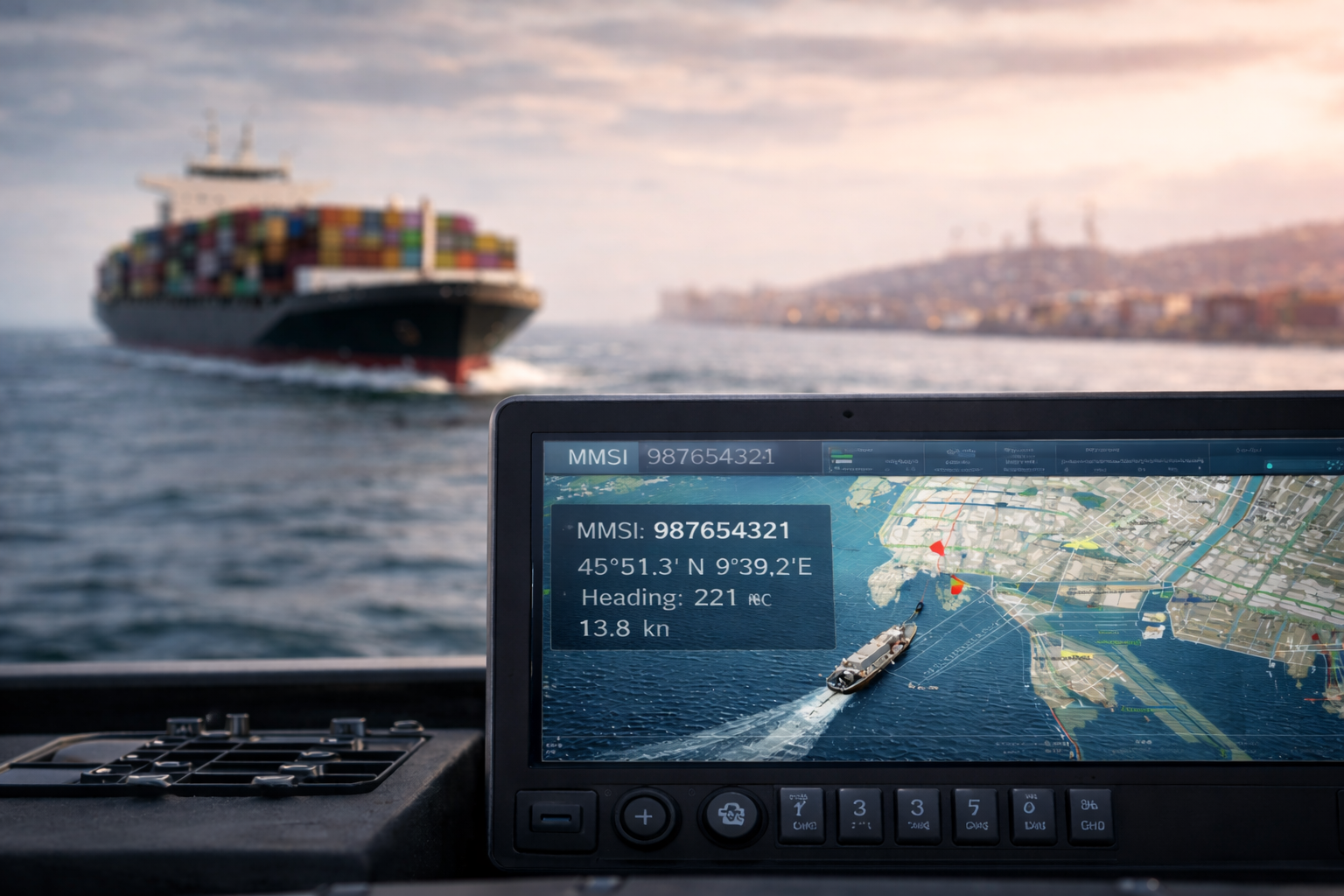
AutomaticIdentification System (AIS) technology has long been a foundational tool forvessel tracking in the shipping industry, providing position, speed, and statusdata for ships worldwide. While AIS plays a key role in basic ocean visibility,it was never designed to deliver complete real time insight intocontainer-level movements across the entire global supply chain. As traderoutes grow more complex and supply chain disruptions become more frequent,decision-makers need deeper, faster, and more connected views. This contentdelves into why AIS alone falls short and how more integrated systems arerequired to achieve true end-to-end supply chain visibility.
AIS and its place in the modern maritime visibility landscape
AIS technology remains the bedrock of maritime awareness,offering key insights into vessel movements across the globe. However, in thecontext of global logistics, its capabilities need to be seen within a broaderframework. AIS was not built with container-level transparency or multimodaltracking in mind, which limits its effectiveness for modern supply chain needs.
AIS is a valuable component of global vesseltracking infrastructure. However, its original purpose limitsits scope when applied to modern supply chain logistics.
How AIS provides a reliable basis for vessel movement data
The Automatic Identification System (AIS) was initiallydeveloped to enhance maritime safety by preventing vessel collisions. It worksby broadcasting a ship’s identity, position (latitude and longitude), course,speed, and destination using VHF radio frequencies. Ships above a certain sizeare mandated by international maritime regulations to carry AIS transpondersthat automatically send this data at regular intervals. These signals arepicked up by other vessels, coastal stations, and satellites, making itpossible to monitor ship traffic across vast ocean areas.
AIS data is used extensively by ports, maritime authorities,and freightvisibility providers to track the location and route ofvessels. It enables a broad understanding of maritime flow and is especiallyhelpful for knowing if a ship is approaching a port, anchored, or underway. Inshort, AIS serves as a live broadcast of a vessel’s public status—but not ofits cargo, containers, or onshore handling processes.
Why AIS alone can’t capture supply chain complexity
While AIS excels at showing where a ship is, it lacks thegranularity to support real time container tracking or provide actionableinsights at the supply chain level. For instance, AIS does nottrack the individual containers onboard a vessel, nor does it capture criticalevents at portsterminals, such as unloading delays, customs clearance, ortruck dispatching. Additionally, AIS can experience data blind spots,especially in congested maritime corridors like the Red Sea,or when vessels are out of range of coastal receivers.
The risks and limitations of depending solely on AIS data
As supply chains grow more complex, the limitations of AISbecome more evident. While it delivers broad coverage for vessel activity, itoffers little detail on cargo handling or container-specific events. Relyingexclusively on AIS can leave logistics teams exposed to gaps that hinder timelydecision-making and risk mitigation.
Depending entirely on AIS data for supply chainvisibility exposes stakeholders to operational blind spots anddelayed reactions to disruptions.
Data gaps and limited satellite coverage
AIS coverage varies across the globe. While coastalreceivers provide excellent signal collection near ports and major traderoutes, remote oceans and polar regions rely on satellite-based AIS, which mayhave delayed updates or reduced resolution. This inconsistency makes itdifficult to maintain real time visibility during long-haul oceanvoyages, especially for time-sensitive cargo.
Lack of context for port congestion and dwell time
AIS data can show that a vessel has arrived at a port, butit cannot indicate how long it will wait to dock or how efficiently the cargowill be processed. Since AIS does not interact with terminal management systemsor customs databases, it provides no information on berth assignment, craneactivity, or portcongestion levels. This creates uncertainty for downstreamlogistics and inventory planning.
Inability to track containers and multimodal handovers
AIS focuses entirely on vessels, not on what they carry.Once a container is offloaded, AIS has no visibility over where it goes or howit moves. This leaves significant gaps in tracking as cargo shifts to trucks,trains, or warehouses. For companies that depend on real timecontainer or end supply chain updates, AIS simply isn’t enough.
Integrating new technologies to strengthen visibility beyond AIS
To address the shortfalls of AIS, supply chain stakeholdersare turning to a combination of smart sensors, digital platforms, andpredictive analytics. These tools not only complement AIS but also unlock newlayers of visibility, making it possible to follow goods through every phase oftransport. This evolution reflects a growing need for data-rich, context-awaretracking systems.
To achieve true supply chain visibility, companies are combiningAIS with other technologies that bring transparency to container-level movementand inland handovers.
IoT sensors and device-level container tracking
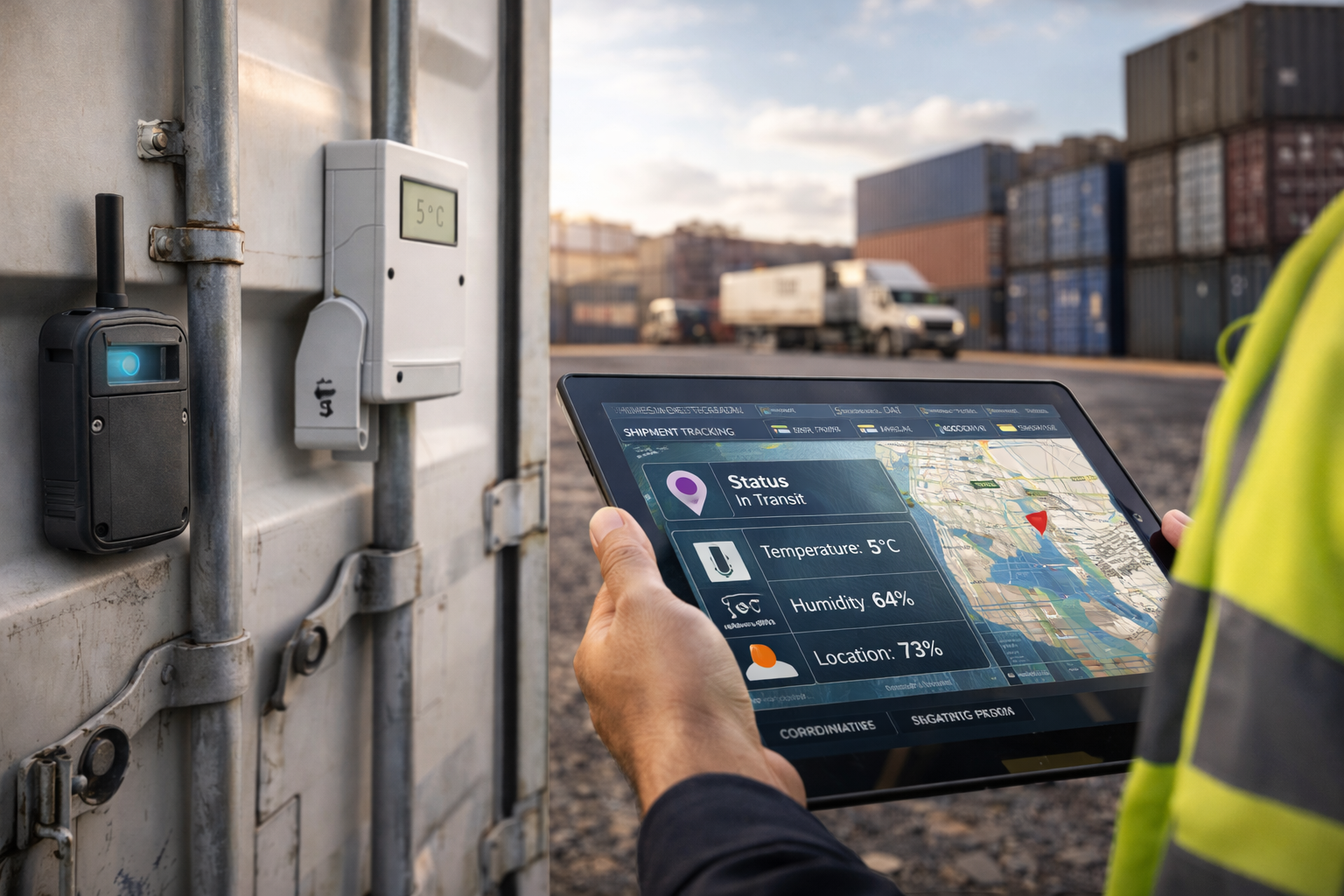
Smart containers equipped with IoT devices can monitortemperature, shock, tilt, and GPS location throughout the journey. Thesedevices send realtime data via cellular or satellite networks, offering updatesevery few minutes. Unlike AIS, IoT sensors remain active during port handling,customs inspection, and even road or rail transport. This enables real timetracking from origin to final delivery, especially importantfor timecontainer shipments like food, pharmaceuticals, and high-valuegoods.
API connectivity with port and customs systems
Many ports and logistics hubs now offer digital interfaces(APIs) that connect to their terminal operating systems (TOS), customsclearance tools, and berth scheduling platforms. By integrating AIS with theseAPIs, visibilityplatforms can combine vessel arrival data with in-terminalmilestones such as offloading start, container availability, and gate-outtimes. This layered view transforms static updates into dynamic real timeinsights that improve planning and reduce guesswork.
AI-powered insights for disruption prediction
Artificial intelligence (AI) adds predictive capabilities totraditional tracking. By analyzing historical traffic patterns, weather data,political unrest, and real-time vessel movements, AI can forecast supply chaindisruptions such as late arrivals or customs delays. Thisallows freightforwarders and shippers to reroute cargo, adjust inventoryforecasts, and communicate proactive updates to customers. The result isstronger supplychain resilience and more efficient operations.
Lessons from companies transforming maritime visibility
Several major logistics and shipping providers have investedin comprehensive tracking solutions that go far beyond basic AIS. Their successillustrates the value of multi-source data integration in optimizing flows,reducing disruptions, and delivering actionable insights across the global supplychain. These examples demonstrate what is possible whenvisibility becomes a strategic priority.
Several companies have successfully moved beyond AIS byembracing advanced supply chain logistics technology.
CMA CGM’s connected container program
CMA CGM launched a global initiative to deploy smartcontainers with embedded tracking and environmental sensors. These devicesrecord temperature, humidity, door openings, and GPS position, transmittingdata via satellite and mobile networks. Customers can access this informationthrough a secure portal, which allows better monitoring of fragile goods.During labor strikes at key ports, CMA CGM used this system to reroutecontainers and avoid spoilage, reducing supply chain disruptions and enhancing customertrust.
DB Schenker’s multimodal tracking platform
DB Schenker developed a proprietary visibility platform thatintegrates AIS, GPS trackers, and IoT container devices. The system provides real timefreight status not only at sea, but also through intermodaltransfers. Using digital twin models and port APIs, it can simulate handovers,identify delay risks, and issue alerts. The platform has helped DB Schenkerreduce last-mile uncertainty and improve on-time delivery rates for automotiveand electronics clients across Europe.
Maersk’s visibility ecosystem with TradeLens
Maersk collaborated with IBM to launch TradeLens, ablockchain-based platform that aggregates data from carriers, terminals, ports,and customs. The system builds a secure and tamper-proof log of containerevents, including vessel boarding, offloading, customs approval, and inlandtransfer. TradeLens allows partners to access real time updatesacross the globalsupply chain, reducing manual documentation and improvingcoordination. This success story showcases how end-to-end integrationcan unlock greater transparency and trust among stakeholders.
Practical steps to improve end-to-end supply chain visibility
Modern visibility strategies must go beyond technologyadoption—they must reshape how data is shared, monitored, and acted upon. Bycombining tracking layers and fostering real-time collaboration, companies canrespond faster and improve predictability. The following best practices outlinehow organizations can enhance their visibility frameworks in concrete ways.
To fully realize the benefits of advanced containertracking, businesses must adopt a multi-layered approach andalign stakeholders around shared visibility goals.
Adopt layered tracking across all transport modes
True end supply chain visibility requires coveragebeyond sea routes. Logistics leaders should deploy a mix of AIS, IoT sensors,port APIs, and GPS to track containers at sea, in port, and on land. Thisensures a continuous data stream, eliminates blind spots, and provides aunified view of cargo movement.
Invest in collaborative data exchange platforms
Companies should prioritize platforms that enable secure,real-time data sharing between carriers, terminals, freight partners, andconsignees. API-driven systems and blockchain tools can standardize updates,reduce errors, and foster transparency across the global supplychain. Collaboration ensures all parties have access toaccurate realtime data and can react quickly to changes.
Prioritize exceptions management and predictive tools
Advanced analytics should be used not only for tracking butalso for identifying deviations from normal routes, schedules, or cargoconditions. Exception management tools allow teams to focus on at-riskshipments, while AI forecasts can help preempt delays. This proactive mindsetimproves agility, supports supply chain resilience, and keeps customersatisfaction high.
How Sinay advances maritime visibility with integrated technologies
To meet the growing demand for full-spectrum visibility inmaritime logistics, Sinay offers modular tools that build on AIS and go muchfurther. Its platform ingests AIS data for vessel tracking but enhances it bylayering in real-time satellite imagery, metocean forecasts, and port trafficanalytics. These features help identify potential delays, assess portcongestion, and track container flows with greater precision.
Sinay’s visibility modules also integrate IoT feeds,predictive ETA algorithms, and API connectivity with port terminals. Thisallows users to monitor shipping activity down to the container level, withaccurate data on timing, environmental conditions, and vessel behavior. Whethermanaging just-in-time arrivals or improving emissions planning, Sinay’s systemensures data is actionable. Its user interface brings together multiple datastreams into a single, intuitive dashboard, enabling supply chain operators toreact swiftly and plan smarter. In this way, Sinay helps enhance global freightvisibility across all stages of the maritime journey.
AIS remains a critical building block in maritimemonitoring, but it cannot meet the demands of modern global supplychains on its own. Enhanced container tracking,integrated data platforms, and predictive technologies are now essential forachieving full real time visibility and managing complexity fromport to doorstep.
When AIS isn't enough: what MariTrace adds
As this article shows, AIS alone leaves blind spots: coverage gaps, vessels that switch AIS off, and no container or port context. That gap is exactly what MariTrace, Sinay's vessel tracking platform, was built to close. It pairs reliable AIS with Mercury, an encrypted onboard device that keeps vessels visible even when AIS drops — for commercial fleets, insurance and security teams.