


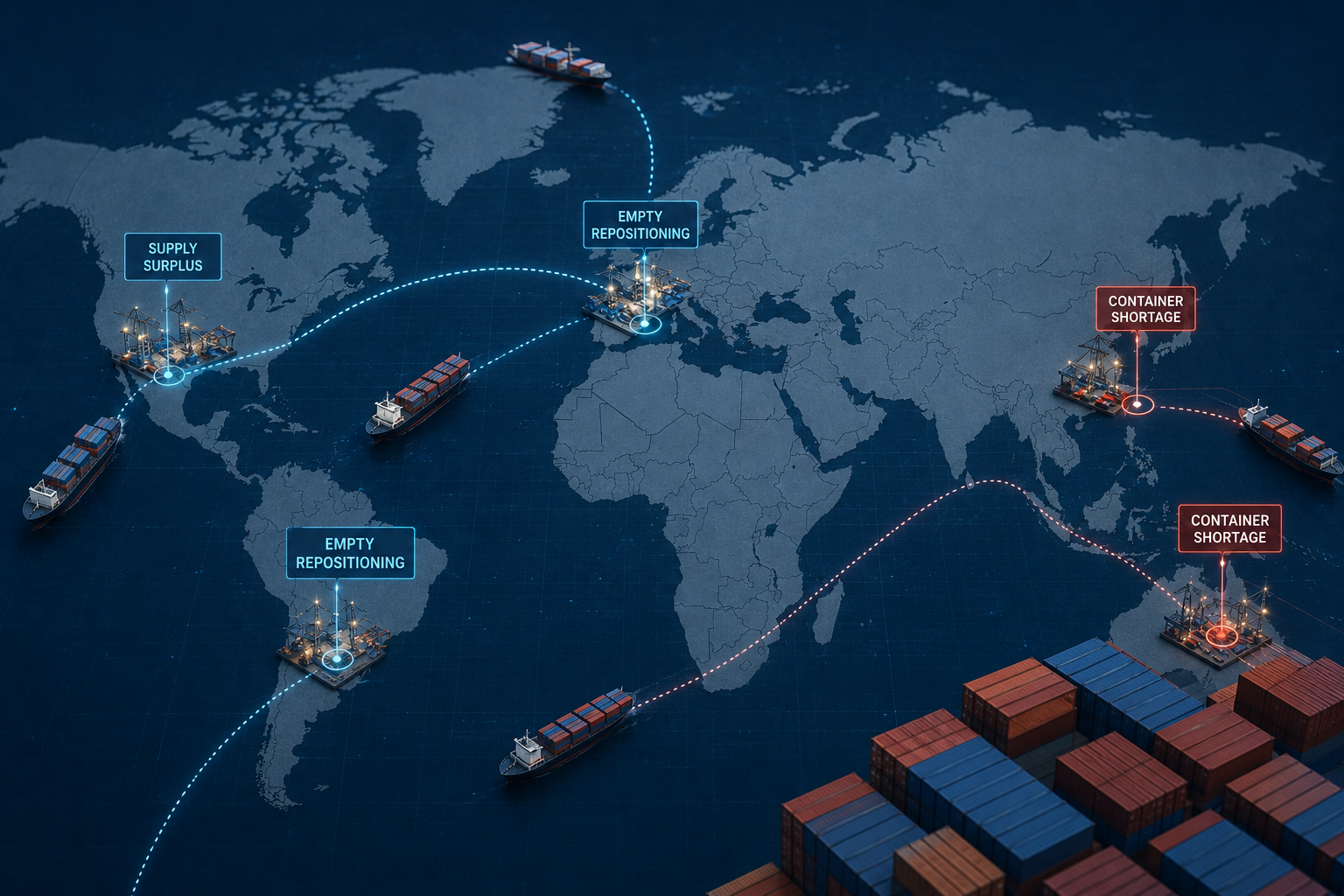
The imbalance of shipping containers across the globe has become acritical challenge in international logistics. With empty units accumulating incertain regions and shortages in others, the cost and complexity ofrepositioning continue to escalate. As digital tools mature, many industrystakeholders hope real-time tracking can address this growing issue. Thiscontent explores the root causes and examines the potential of data-drivensolutions.
The adverse effects of container imbalance on global trade
Understanding the potential of tracking data requires grasping thereasons behind container imbalances and their effects on international shippingoperations.
Trade flows and regional disparities as root causes
A primary driver of container imbalances is the uneven flow ofgoods. North America, for example, imports significantly more than it exports,resulting in a surplus of empty containers at its ports. Conversely, Asianmanufacturing hubs frequently experience shortages, as loaded containers leavebut fewer return. This trade mismatch creates persistent container distributionchallenges.
The rising cost of repositioning empty containers
Repositioning empty containers to areas of demand involvestransport, storage, and handling expenses. These costs, as noted by the BostonConsulting Group, can account for up to 30% of total container operatingexpenses. Additionally, repositioning consumes vessel capacity, generatesemissions, and imposes environmental and financial burdens on shippingcompanies.
Operational impacts on ports and carriers
Container imbalance further strains port operations and storageyards, as the accumulation of empty containers can overwhelm storagecapacities. Ports in Europe and the U.S. often face significant backlogs,reducing import capacity and efficiency across the supply chain. This leads todelays, increased demurrage charges, and pressure on shipping companies torespond quickly, sometimes inefficiently.
Using tracking data to move containers smarter
With increasingly complex container flows, real-time tracking andanalytics offer promising solutions for smarter management.
Real-time visibility for smarter container management
Real-time tracking systems deliver comprehensive data on containerlocations, movements, and availability, enabling shipping companies and cargoowners to make informed decisions. Better visibility facilitates precisecontainer inventory management, reducing idle time and manual coordination.
Predictive analytics and demand forecasting
By combining historical usage patterns with current trade data,tracking systems can predict future container needs. Predictive analyticssupports proactive repositioning strategies, significantly reducing unnecessaryempty container movements and enabling efficient planning across the entiresupply chain.
Coordinating through virtual container yards
Virtual container yards—digital platforms matching empty containersupply with regional demand—are becoming increasingly popular. These platformsfacilitate data-sharing between shipping lines, freight forwarders, andterminal operators, minimizing long-haul repositioning by reallocatingcontainers locally. This collaborative method is both cost-effective andenvironmentally sustainable.
The main obstacles slowing container repositioning improvments
Despite advancements in tracking technologies, practical barrierscontinue to hinder repositioning efforts.
Surge in global demand and port congestion
Post-pandemic trade recovery and increased e-commerce haveintensified pressure on shipping routes. By early 2025, global containervolumes rose by 11.2%, emphasizing growing logistical demands. Persistentcongestion at key ports has resulted in widespread delays. Ports like LosAngeles, Long Beach, Shanghai, and Antwerp face prolonged congestion,complicating repositioning strategies and extending container turnaround times.
This elevated demand has contributed to widespread congestion atkey global ports. By March 2025, nearly 8.4% of the world’s containerfleet—roughly 2.65 million TEUs—were impacted by delays caused by overloadedterminals and logistical bottlenecks. In some cases, vessels have reporteddelays of up to three weeks, particularly along heavily trafficked routes inAsia and the Americas.
Notable congestion continues at several major gateways. The Portsof Los Angeles and Long Beach remain under pressure, with wait times rangingfrom two to three days due to vessel bunching and labor shortages. In China,the Port of Shanghai faces recurring slowdowns linked to surges in outbounddemand. Meanwhile, European ports like Antwerp are grappling with regionaltrade growth and yard density challenges. These conditions complicaterepositioning efforts, reduce container availability where needed, and increaseturnaround times across the network..
Fragmentation and lack of data sharing
Despite digital advances, the shipping industry remainsfragmented, with many stakeholders using incompatible systems, hampering dataexchange. This lack of transparency slows decision-making and increasesrepositioning errors. Effective tracking relies on enhanced collaboration andsystem interoperability.
Environmental and regulatory pressures
With growing attention to the carbon footprint of globallogistics, empty container repositioning is under scrutiny. Regulators andshippers alike are pushing for greener solutions, requiring carriers to justifyor reduce unnecessary container moves. Effective utilization of tracking datacombined with operational adjustments is necessary to meet these sustainabilitytargets.
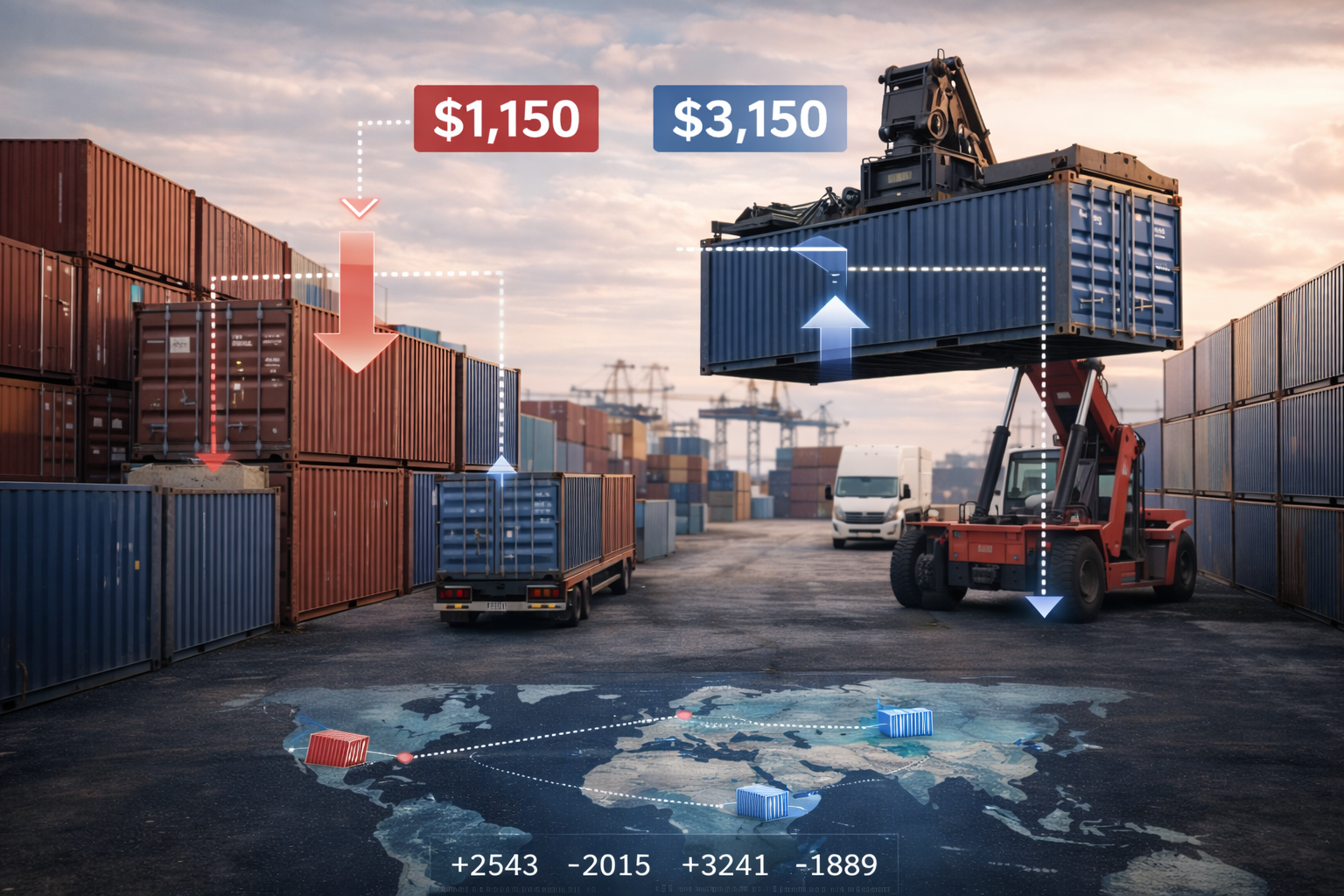
Reinventing repositioning with new logistics models
Besides tracking tools, several innovative models are emerging toaddress imbalance in container flows more effectively.
The rise of shippers owned containers (SOCs)
Shippers Owned Containers, or SOCs, offer an alternative tocarrier-owned units. In this model, the cargo owner provides the container,which reduces dependence on carrier fleets and allows for greater flexibilityin reuse. SOCs can be coordinated through digital platforms, minimizingrepositioning by assigning containers to local or regional routes.
Pooling and interline container exchanges
Container pooling—where multiple carriers share access to acombined fleet—has been explored as a way to reduce surplus and shortagecycles. Similarly, interline exchanges between shipping lines at shared hubscan eliminate redundant repositioning. Both strategies rely heavily on accuratecontainer inventory tracking to function effectively.
Blockchain and smart contract applications
Some companies are experimenting with blockchain to improve thereliability of container management data. Smart contracts automate handovers,rental terms, and damage reports, reducing administrative overhead. Combinedwith real-time tracking, these technologies can streamline how empty containerlogistics are planned and executed.
When tracking technology delivers measurable results
Several logistics providers are already seeing strong results byintegrating tracking data into their repositioning strategies.
Hapag-Lloyd’s tracking-enabled containerflow optimization
Hapag-Lloyd uses a digital platform to monitor its containerinventory worldwide. With real-time location and condition data, the companycan prioritize the reuse of nearby empties rather than sending units acrossregions. This approach has reduced repositioning needs by up to 20% in certaintrade lanes.
DP World’s smart container yard solutions
Global port operator DP World has invested in smart terminalsequipped with sensors and tracking technology. These systems feed data into acentralized container management platform, allowing for dynamic allocation ofspace and faster decision-making. At Jebel Ali Port, these systems havesignificantly improved container yard turnaround times, lowering congestion andimproving asset utilization.
Maersk and IBM’s TradeLens initiative
Through the TradeLens platform, Maersk and IBM are leveragingblockchain and IoT to enhance global container visibility. The system sharescontainer movement data with partners across the supply chain, reducingpaperwork and delays. For empty containers, this allows earlier planning andfewer repositioning errors.
Sinay’s contribution to smart container repositioning
In the search for more effective ways to manage containerinventory imbalance, Sinay offers a platform that brings clarity to containerflows through high-resolution tracking and predictive analytics. By integratingreal-time location data, port traffic information, and maritime environmentalconditions, Sinay helps shipping companies make faster and more informedrepositioning decisions. Its technology enables users to monitor the exactposition of empty containers, anticipate availability, and optimize returnjourneys based on cargo demands.
Sinay's approach is particularly useful in aligning container yardactivity with regional needs. For instance, by identifying opportunities toreroute containers or pool regional supply, the platform helps reduceunnecessary empty container moves. It also contributes to sustainabilityefforts by supporting lower-emission repositioning strategies through routeoptimization and dwell time minimization. Combined with its modular integrationand user-friendly dashboards, Sinay’s system enhances decision-making acrossthe container supply chain, offering a powerful ally in addressing therepositioning crisis.
As digital logistics continue to evolve, integrating containertracking data with market forecasts and collaborative platforms may hold thekey to solving the global container imbalance. The future of repositioning willdepend not just on knowing where containers are, but on knowing where theyshould go next—and acting before the crisis compounds.