


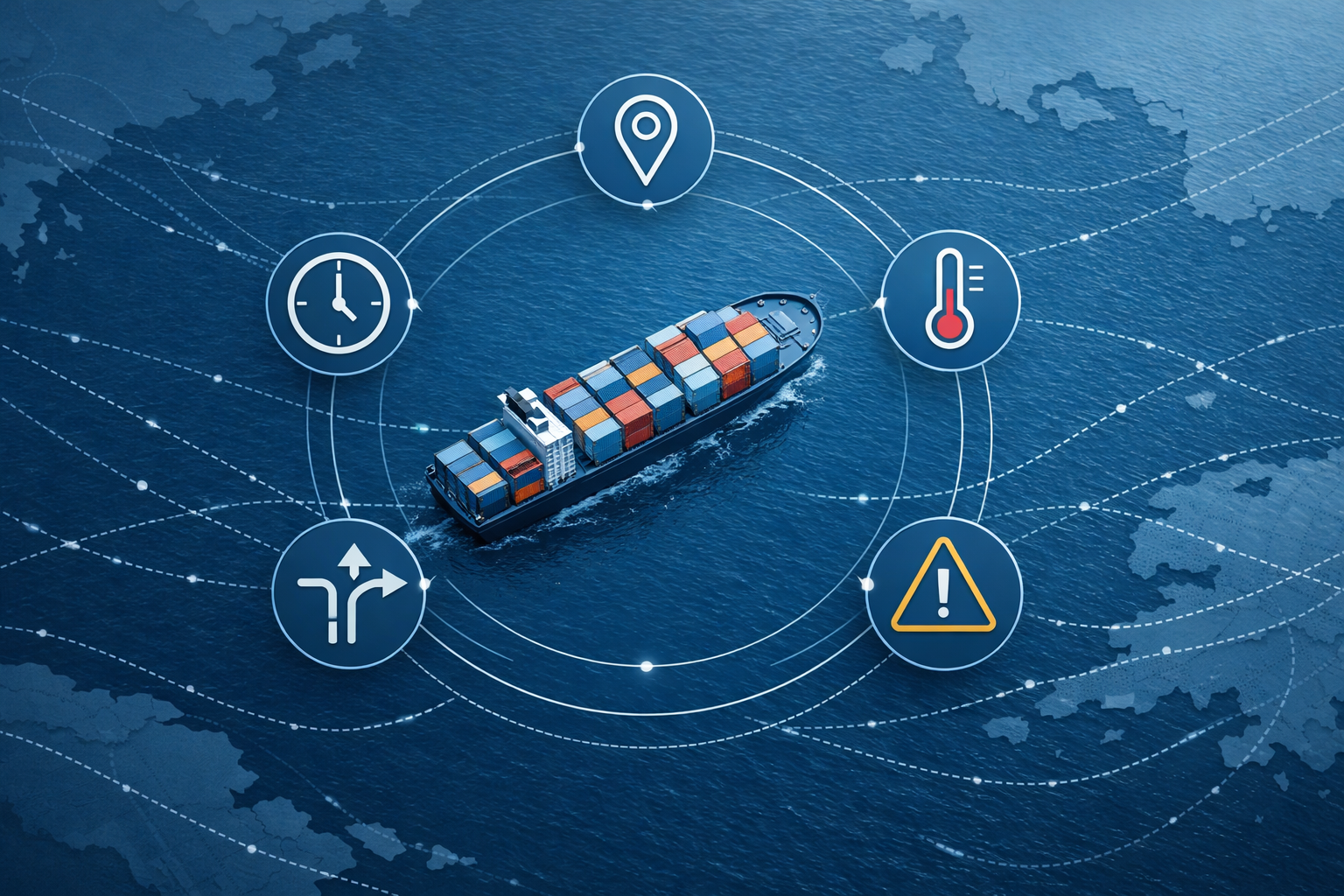
Real-time visibility into shipments is crucial for all stakeholders inshipping transportation, including shippers, beneficial cargo owners (BCOs),and freight forwarders. Container tracking software provides this criticalvisibility into each shipment’s progress,allowing swift reactions to potential delays or problems and ensuring timelypreparation for upcoming operations. This article dives into the variousmethods for receiving container tracking alerts within these solutions.
What are the three primary alert delivery mechanisms
In a complex and volatileshipping environment, container tracking has become a necessity for allstakeholders. Real-time visibility into their maritime shipments provides themwith a range of critical benefits for their respective businesses:
· Enhanced Monitoring: From forwarders and portcrew to beneficial cargo owners (BCOs) and shipping companies, everyone gainsthe ability to track shipments throughout their journey, fostering greatertransparency across the supply chain.
· Proactive Operations: Forecasting arrivalsand departures becomes possible for forwarders and port crews, allowing them tooptimize operations and minimize delays.
· Informed Decisions: BCOs receive immediatealerts for any disruptions, enabling them to make data-driven choices. Forexample, they can explore alternative delivery methods like sea-air to maintaintight delivery schedules.
· Improved Vessel Management: Shippingcompanies gain valuable insights into vessel location and crew status,empowering them to prepare for potential emergencies like rescues or necessaryreroutes.
To avoid the tedium of manual monitoringfor each shipment, container-tracking software has become essential. Modernsolutions empower users to receive real-time notifications about theircontainer’s status, alerting them not only when key milestones are reached butalso of any discrepancies compared to pre-set standards.
A wide range of container trackingsolutions are available on the market, all operating on the same principle.These solutions use either the container number or the bill of lading (BOL)number as a unique identifier to track the shipment. Users can then set upalerts for relevant aspects of their shipment, ensuring they receive timelynotifications about their container’s status.
Such tools often include various features like:
· Locationtracking on a map;
· Status/Milestoneupdates (e.g. arrival at a particular port, departurefrom a facility, customs clearance completion, delays or any exceptions encounteredduring the journey…);
· Abilityto track multiple containers;
· Historicaldata on past shipments.
However, users can receive these alerts inseveral ways, either through in-app notifications, email alerts, or webhooks.Each method serves a specific purpose. Understanding these purposes is key toselecting the option that best suits the company’s needs and staying informedabout the status of its container shipment.
In-App Notifications
This method involves using a dedicated mobileor web application offered by the shipping company or a third-party trackingplatform.
Users can customize their notificationsettings to receive alerts based on specific events. This method provides acentralized and convenient way to track containers and manage logisticsoperations. Notifications can be displayed through push notifications, pop-upalerts, or within the app’s dashboard.
Email alerts
Container tracking alerts are convenientlydelivered via email. Users can customize their preferences within the system toreceive notifications for specific container events and updates. This familiarand accessible method keeps users informed about container movements andlogistics activities.
Webhooks
With webhooks (automatedmessage), when specific events occur, such as containerlocation updates or status changes, the tracking system sends a webhook payloaddirectly to a designated URL endpoint. This enables users to integrate trackinginformation seamlessly into their own applications, systems, or databases. Thispayload typically contains relevant data about the event, such as container ID,timestamp, location, and event type.
Users can then process this dataprogrammatically, trigger actions, or display information in their customapplications or dashboards. This method is more technical and often used by businesses with frequentshipments.
Webhooks provide a flexible and scalableway to integrate container tracking notifications into the company’s workflowsor internalsoftware or application.
Webhooks offer advantages like:
· Flexibilityto customize how the notifications are processed and displayed within thecompany’s own system.
· Real-timeupdates as relevant events occur, eliminating the need for manual checking.
· Integrationwith other business applications for in-depth data analysis orautomated workflows.
How can businesses leverage container tracking data to drive value for supplychain?
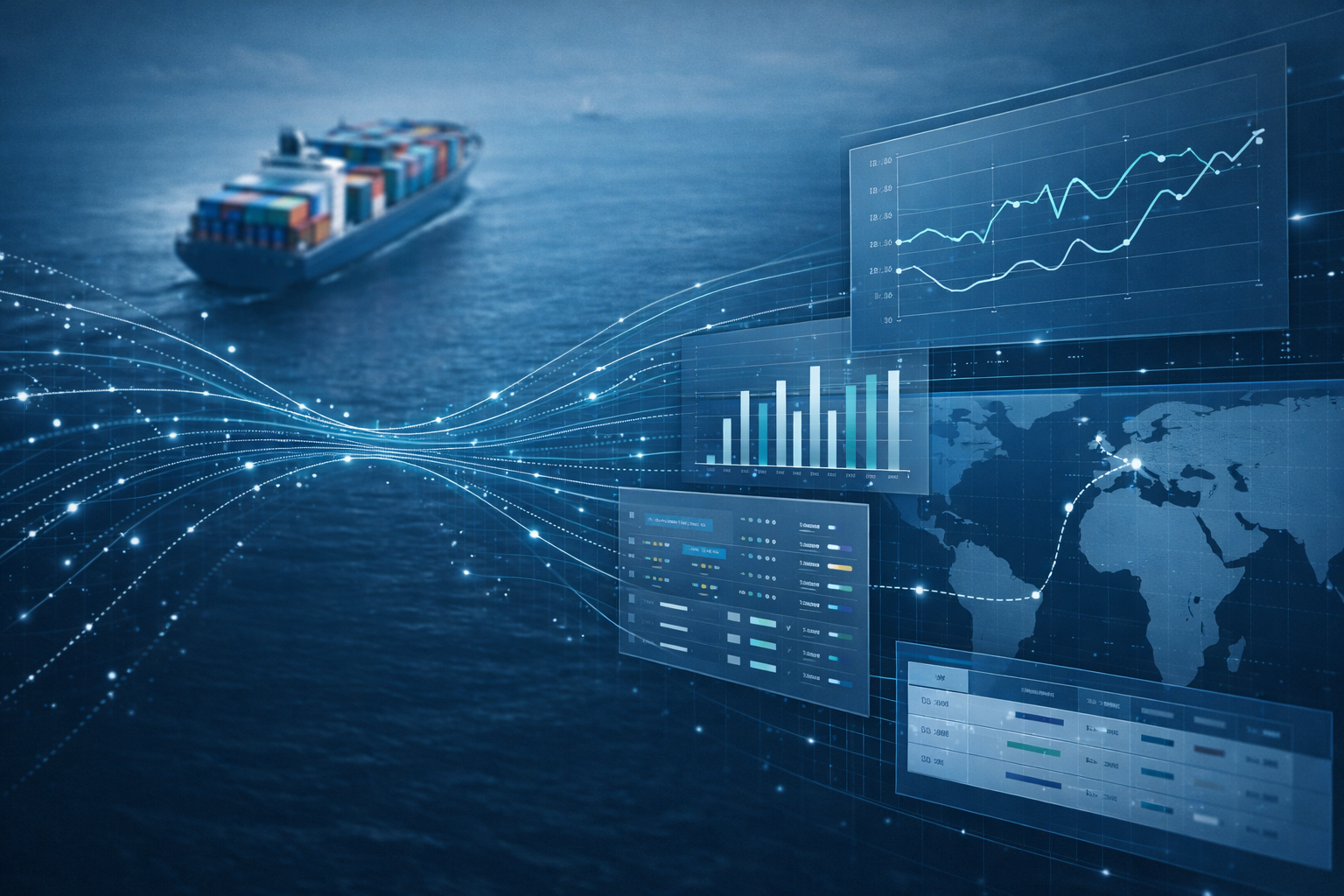
Informationused for container tracking can come from various sources like GPS, RFID tags,port logistics systems, and even weather information. In order to becomeactionable insights for businesses involved in the supply chain, container datatrackers are more than just location beacons. The raw data they collectundergoes a complex transformation process. First, data needs to be cleansedand filtered to eliminate errors or inconsistencies. Next, it’s integrated withinformation from other sources, like port schedules, weather patterns, andhistorical shipment data.
Artificial intelligence and Big dataanalytics allow users to extract valuable knowledge from complexshipping data sets. These insights include weather patterns, trafficcongestion, historical shipping routes, and fuel costs. On this basis, AI canrecommend optimal routes for specific cargo types, considering speed, cost, andpotential delays, resulting in more efficient shipping process.
AIgoes beyond just smart routes - it’s a cost-saving champion for shipping! From containerutilization data, AI recommends strategies for optimal packing and stacking,squeezing the most out of every inch of space, hence minimizing wastedresources. Furthermore, AI leverages sensor data and historical maintenancerecords to predict equipment needs, preventing costly downtime and ensuringsmooth operations.
How to choose the mostsuitable notification method?
Despitethe new software effeciency, several factors may affect container tracking andthe accuracy of the information it provides. Here are some of the keychallenges:
· Technical malfunctions: GPS or other tracking devices oncontainers can malfunction due to battery failure, hardware issues, or softwarebugs.
· Limited signal coverage: In certain areas, like remotestretches of ocean or within crowded ports, satellite or cellular signalsneeded for tracking data transmission may be weak or unavailable.
· Human data entry mistakes: Inaccurate or incompleteinformation entered during the initial shipment process can lead to trackingerrors throughout the journey.
· Manual intervention: Some parts of the container trackingprocess may still involve manual data entry, increasing the risk of humanerror.
· Delays and schedule changes: Unexpected delays at ports,canals, or due to bad weather can disrupt tracking updates, making it difficultto pinpoint the exact location of a container.
· Unforeseen events: Events like piracy, accidents, orpolitical instability can disrupt communication and tracking data transmission.
· Cybersecurity threats: In rare cases, malicious actors mayattempt to hack into tracking systems to manipulate data or disrupt operations.
· Outdated port facilities: Older ports may lack thenecessary infrastructure to efficiently scan and track containers as they movethrough the facility.
· Incompatibility between systems: Different shippingcompanies and ports may use incompatible tracking software, making it difficultto seamlessly track containers across different parts of the supply chain.
These factors significantly hindercompanies’ ability to make informed decisions about the best solution.
In-app notifications or email alerts areideal for individual users or infrequent shipments. They are user-friendly andrequire minimal setup. However, for businesses with regular shipments, webhooksmay offer a more powerful solution. They allow for real-time integration withexisting systems and automated workflows.
Some platforms may offer a combination ofthese methods, allowing each company to choose the most suitable approach basedon their preferences, workflow requirements, and integration capabilities. Besides,that’s one of the key aspects to consider within the specific functionalitiesoffered by the tracking system before selecting it.
Combining multiple ways to get notifiedabout the status of container shipment is essential for a comprehensive andeffective supply chain management. As a matter of fact, relying on a singlenotification method can create blind spots in the logistics operations. On thecontrary, thanks to redundancy: If one method fails or experiences delays, itis still possible to access the information and get the required updates.Moreover, different methods cater to different needs. In-app notificationsmight be good for real-time monitoring, while email alerts can be helpful forkeeping track of specific milestones.
In conclusion, a multimodal notificationsystem, that leverages the strengths of each notification method, optimizescontainer tracking efficiency. This integrated approach ensures a steady flowof information across all supply chain touchpoints, guaranteeing timely andaccurate data at every stage of the supply chain.
Why choose a cloud-based trackingsoftware?
A software-as-a service container tracking solution offers acost-effective, user-friendly, and scalable solution for managing containershipments. Users gain real-time visibility into their supply chain and makeinformed decisions, all without the burden of managing software infrastructure.
· SaaS solutions are cloud-based,meaning they are accessible from any web browser with an internet connection.There’s minimal installation or configuration required, allowing for quickdeployment and use.
· It eliminates the need forexpensive software licenses and infrastructure setup. Customers pay a monthlyor annual subscription fee, making it easier to budget and manage costs.
· Authorized users can access thetracking information from anywhere with an internet connection, facilitatingremote work and team collaboration.
· SaaS providers typically offeruser-friendly interfaces that are intuitive and easy to learn, even for thosewithout extensive technical knowledge.
· The vendor ensures regularmaintenance and update of the software. Hence customers benefits from thelatest features, bug fixes, and security patches without needing to manage themthemselves. As a result, in-house IT staff no more have to manage softwareupdates and maintenance, freeing them for other tasks.
· Many SaaS-based shipmenttracking solutions offer integration with other business applications likelogistics management software or accounting systems.
· SaaS providers typically investheavily in data security measures, ensuring the protection of sensitiveshipping data.
· SaaS solutions are readilyscalable. As the company’s shipping needs grow, it can easily adjust itssubscription plan to accommodate additional users or features.
Sinayhas recently acquired SafeCube, a container tracking software that completesits portfolio of solutions for ocean freight management. SafeCube seamlesslyintegrates data from shipping lines, ports, vessels, and even your existingsystems (ERP, WMS, TMS, etc.) through Sinay’s all-in-one API.
Thiscombination provides a real-time, comprehensive view of all your shipments at aglance. Users can access this information through an interactive map thatdisplays key details for each container using its ID or bill of lading number.They instantly see the consignee’s name, shipment status, location, trackinghistory, and even the vessel it’s currently on.
ButSafecube’s power lies in its advanced features:
· Automated Alerts: Users can set up notifications forcritical updates and receive them via email or push, ensuring they stayinformed at all times.
· Data-Driven Insights: Safecube analyzes tracking data andlogs, extracting valuable insights on transit times, schedule deviations, routechanges, and issue resolution time. By comparing these metrics with industrybenchmarks, users can identify trends, evaluate carrier performance, andpinpoint areas for optimizing their supply chain.
Farbeyond container location tracking, this extensive and reliable solutionenables seamless multimodal shipment management and data-driven decision-makingfor a smooth logistics experience.